Modern Slavery Act Statement
This statement is made on behalf of Arma Partners LLP (“Arma” or “the Firm”) pursuant to section 54(1) of the Modern Slavery Act 2015 (the “Act”) and constitutes our slavery and human trafficking statement for the financial year ending 31 March 2026.
- Introduction and Commitment
Arma is committed to the highest standards of ethics and integrity. We have a zero-tolerance approach to modern slavery and human trafficking, and we are committed to ensuring that these practices do not take place in any part of our business or supply chains. This statement outlines the steps we have taken during the financial year ending 31 March 2026 to prevent modern slavery and human trafficking, in line with the UK Home Office’s guidance on transparency in supply chains. - Our Business and Organisational Structure
2.1. Our Business
Arma is an investment advisory firm providing independent M&A and corporate finance advice to clients in the Digital Economy. We are headquartered in London and also operate offices in Munich, New York, and Palo Alto. Given the nature of our services, our in-house operations consist of highly skilled professional staff working in office environments.
2.2. Our supply chain
Our supply chain is straightforward and of minimal risk. It primarily comprises professional services and office support suppliers, including legal counsel, accounting and audit firms, information technology providers, office equipment and supplies vendors, and facilities management services such as cleaning, maintenance, and catering for our offices and events. The majority of our direct (Tier 1) suppliers are located in the UK, EU, or USA, regions known for having established labour protections. We do not produce, manufacture, or retail physical goods.
2.3. Supply Chain Visibility
As a financial services firm, we understand that our capacity to look past Tier 1 suppliers is limited. We mitigate this by choosing established suppliers with their own ethical sourcing policies and by expecting all our primary vendors to uphold standards consistent with our own. We will continue to explore ways to gain additional assurance about critical indirect suppliers where appropriate. - Policies in Relation to Slavery and Human Trafficking
Arma maintains a range of internal policies and procedures that support its zero‑tolerance approach to modern slavery and human trafficking. These include the firm’s Code of Conduct, whistleblowing arrangements, and third‑party onboarding and due diligence procedures, which together set expectations around ethical conduct, legal compliance, and the responsible management of suppliers.
These policies are endorsed by the Managing Partner and overseen by the Compliance function and are communicated to all employees as part of Arma’s compliance framework. Expectations relating to modern slavery are also communicated to suppliers through proportionate due diligence processes, contractual provisions, and supplier declarations, rather than through a standalone supplier policy.
Arma keeps its policies and procedures under regular review to ensure they remain appropriate for the firm’s size, business model, and risk profile, and to reflect evolving legal requirements and best practice. - Due Diligence Processes
Arma applies proportionate, risk based due diligence processes to manage modern slavery risk in its supply chain, considering the nature, scale, and risk profile of each supplier and engagement.
4.1 Supplier Onboarding
Before engaging new suppliers, particularly in higher risk categories such as facilities services (including cleaning and maintenance), Arma undertakes appropriate due diligence to assess modern slavery risk. This may include reviewing publicly available information (such as modern slavery statements or adverse media) and obtaining confirmations from suppliers regarding compliance with applicable modern slavery legislation.
For low risk engagements, such as hospitality, events, and catering services, Arma may not conduct in-depth supplier due diligence, adopting a proportionate approach and implementing a simplified due diligence questionnaire or proportionate risk assessment, reflecting the limited risk exposure of the engagement.
4.2. Contractual controls
Where appropriate, Arma includes contractual provisions requiring suppliers to comply with anti slavery and human trafficking laws. For higher risk or ongoing supplier relationships, suppliers may also be asked to provide formal confirmations or declarations relating to modern slavery, or to demonstrate that equivalent standards are embedded within their own policies and controls.
4.3 Supplier monitoring
Arma adopts a risk‑based approach to ongoing supplier oversight. Given the firm’s low‑risk supply chain, monitoring efforts are focused on suppliers that could potentially present elevated risk based on their services, location, or workforce profile. Where appropriate, Arma seeks updated confirmations from key suppliers that they have no knowledge of modern slavery within their operations or supply chains. - Risk Assessment and Management
During the reporting period, Arma conducted a modern slavery risk assessment covering its own operations and its Tier 1 suppliers. The assessment was undertaken by the Compliance function and reviewed by senior management and is reviewed annually or upon any material change to the firm’s operations or supply chain.
The assessment considered factors including the nature of Arma’s business model, geographic footprint, workforce composition, and supplier categories. As a professional services firm providing corporate finance and M&A advisory services, Arma does not engage in manufacturing, production, or retail activities, and employs a highly skilled professional workforce operating in regulated office environments. The inherent risk of modern slavery within Arma’s own operations was therefore assessed as low.
Supplier risk was assessed by category, with particular attention given to areas commonly associated with higher modern slavery risk in the market. While the majority of Arma’s suppliers (such as professional services and IT software providers) were assessed as low risk, the firm recognises that the wider IT hardware supply chain may present higher inherent risk at the manufacturing stage. Given the absence of direct contractual relationships beyond Tier 1 suppliers, Arma mitigates this risk by engaging only reputable vendors with established compliance programmes and modern slavery statements.
Overall, considering existing controls, including supplier due diligence, contractual protections, governance oversight, and escalation procedures, the residual risk of modern slavery within Arma’s operations and supply chain was assessed as low. - Training and Awareness
During the 2026/27 financial year, Arma will introduce dedicated modern slavery training for all employees. This training will build on the firm’s existing compliance programme which incorporates modern slavery training and is intended to raise awareness of modern slavery risks, indicators, and reporting obligations relevant to our business and supply chain.
- Effectiveness and Key Performance Indicators
Arma assesses the effectiveness of its approach to preventing modern slavery through a combination of qualitative indicators, internal reviews, and ongoing oversight by senior management, rather than relying solely on quantitative metrics. This reflects the firm’s size, business model, and low risk supply chain.
Staff awareness of ethical conduct and modern slavery risks is monitored through the firm’s compliance training programme and internal reviews. While modern slavery is currently addressed as part of wider compliance and financial crime training, Arma has committed to introducing dedicated modern slavery training for all employees from the 2026/27 financial year.
The effectiveness of supplier‑related controls is assessed through the operation of Arma’s third‑party onboarding and risk assessment processes, including the use of supplier questionnaires, contractual protections, and periodic review of higher‑risk or more material supplier relationships. Compliance monitors whether appropriate due diligence has been applied on a risk‑based basis and whether any issues or red flags have been identified.
Arma monitors whistleblowing channels, management reporting, and Compliance escalation processes for any reports or concerns relating to modern slavery or human trafficking. During the reporting period, no such issues were identified.
The outcomes of these reviews are discussed with senior management as part of the firm’s compliance and risk governance processes. While no incidents have been identified to date, Arma recognises that the absence of reported issues does not equate to the absence of risk and therefore continues to rely on ongoing risk assessments, supplier engagement, and internal oversight to judge effectiveness.
As Arma’s modern slavery framework continues to develop, the firm will keep its approach to measuring effectiveness under review and may introduce additional indicators where this is proportionate and relevant to its risk profile.
- Continuous Improvement
Arma Partners is committed to continuous improvement in our approach to tackling modern slavery:
• Policy and Process Updates: We will review our Supplier Code of Conduct and procurement policies in the coming year to ensure they reflect any new legal requirements or best practices. We will review and update where necessary our standard supplier onboarding checklist to include more detailed human rights criteria.
• Enhanced Supplier Engagement: Building on our current practice, we intend to extend our outreach beyond our largest suppliers. In 2026/27, we aim to obtain modern slavery compliance confirmations from a broader group of suppliers, including secondary vendors, to further strengthen our supply chain oversight.
• Training Development: We will review and refresh where necessary our training materials annually.
• Staying Informed: We will monitor updates in legislation, guidance, and industry initiatives related to modern slavery. Taking a proportionate approach, we will consider leveraging external resources such as industry forums or benchmarking our practices against peers.
By taking these steps, we aim to not only maintain compliance with the Modern Slavery Act, but also to contribute to the broader effort to eliminate modern slavery from business practices on an ongoing basis.
Approval and Signature
The Managing Partner of Arma Partners LLP gave approval to this statement on 15 April 2026. A review and update will take place once every year. Our statement, submitted to the UK Government’s Modern Slavery Statement Registry, will also be published on our website as required by Section 54 of the Modern Slavery Act 2015.
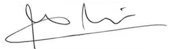
Paul-Noël Guély
Managing Partner
15 April 2026